
Redesigning and relaunching Dingoonity
Max Glenister
Over the weekend I relaunched Dingoonity.org. I launched the site back in November 2009, a bit of a rush job as far as the design of the boards was concerned — it coincided with me getting a full-time web design job at RS Components, so while giving the paid job my 100%, Dingoonity’s design got neglected.
Since then I have tried to find time to finish up the design, and early last year I got pretty close to releasing a new design based on the existing Simple Machines Forum 1.1.x software, but I never found it a particularly nice experience to work around the muddy tables of the board pages, and so never finished the design.
Cut to earlier this month, after neglecting the community more than I care to admit, I was chatting with one of the co-founders and it occurred to me that even though I’m neglecting and not nurturing the website, the community continues to thrive.
Dingoonity has 2750 members who have written 26600 posts in 2900 topics. Not bad for a niche community about a Chinese portable console that is able to play hundreds of retro console games, and hundreds of new homebrew games.
Amidst some future plans for the site, I decided I would finally get around to finishing up the design of the site, and so I created a development server with a copy of the database from the live site, and set about trying out some things. The site now runs on Simple Machines Forum 2.0 RC4 — so it has with that a whole load of improvements.
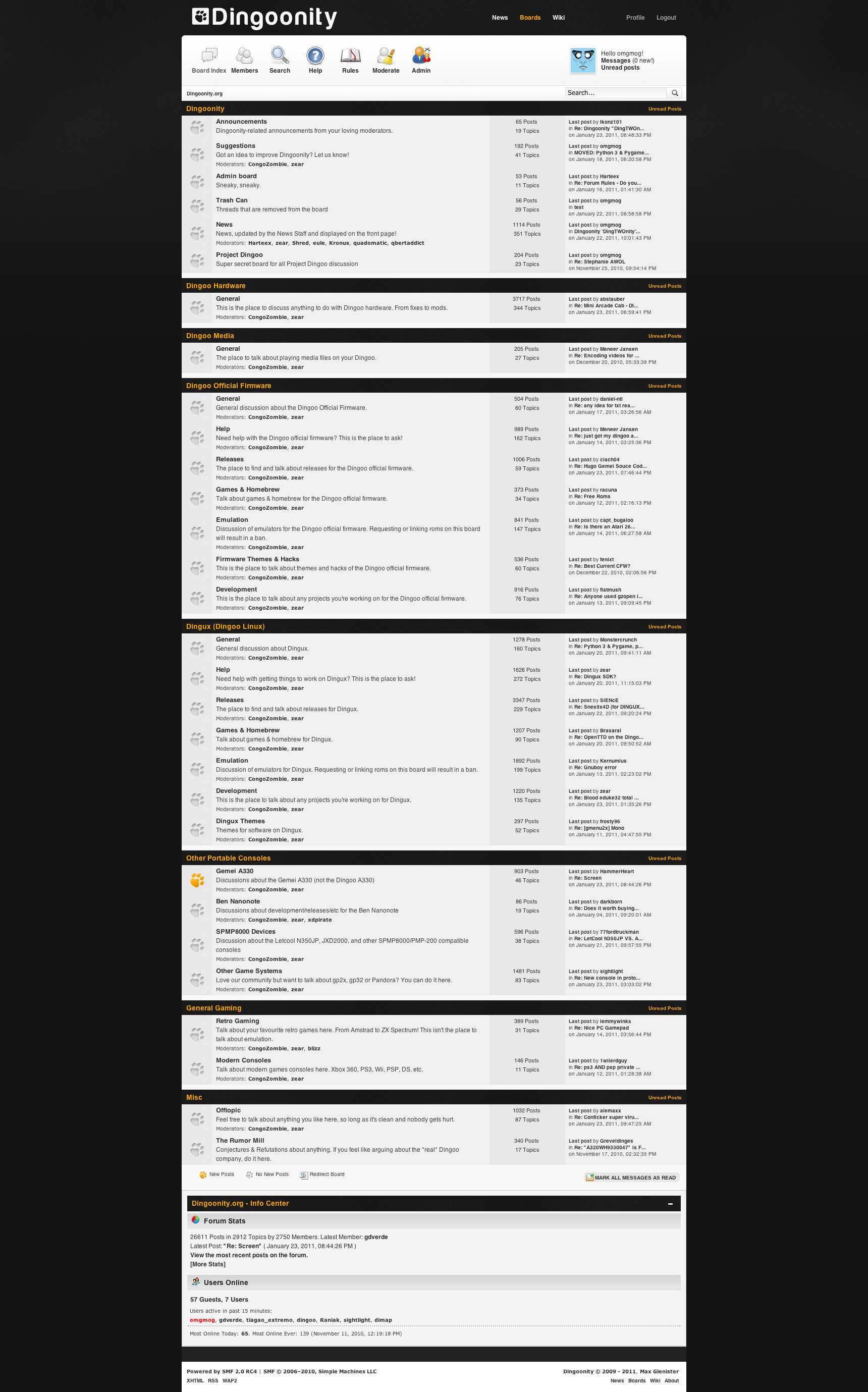
The main focus of the new design was to make the home/news page more connected to the boards, and I’ve done that by having a fixed persistant header section with links to all major areas of the site (profile/messages/help/rules/search/admin/etc.), as well as throwing in a rather nice modal login box that I wrote using jQuery.
The relaunch went pretty smoothly, though initially I had some problems with transferring packages/modifications from my development server over to the live site, but during the early hours of last night and much of today I’ve successfully squashed most of the major issues.
There are some features that I was unable to bring over from the old SMF install, but I hope to be able to add these as soon as their packages have been updated/fixed to work correctly.
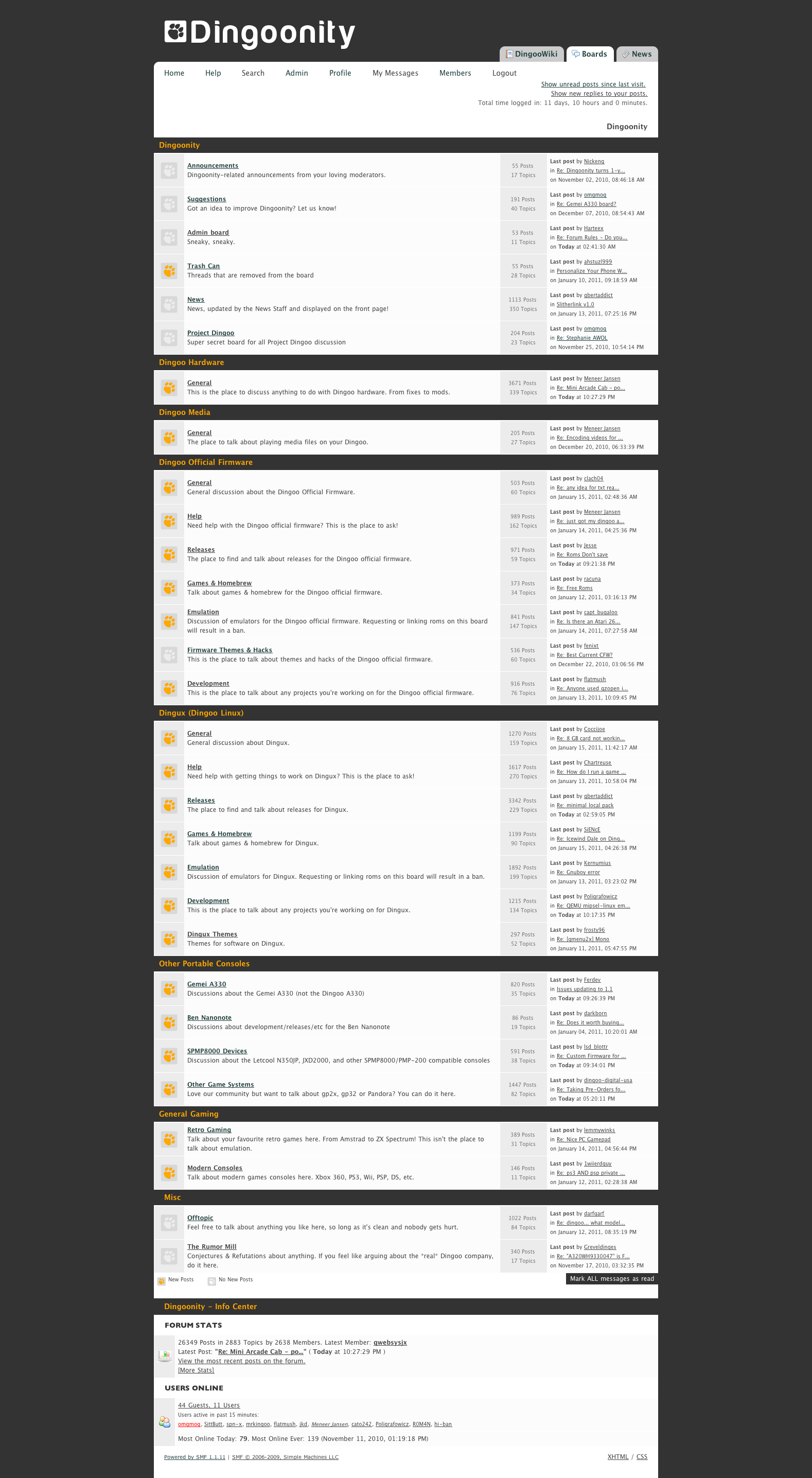
If you’re interested in seeing the difference of the board from before, to now, here are a couple of full-page screenshots comparing the old and new:
Related posts
- Antiquated CSS and why we needed it
I came across a catalogue of antiquated HTML snippets and artefacts, the kind of markup we just accepted as necessary in the <head> of every site. It got me thinking about the CSS side of that same period, the stylesheets rather than the markup. My first job in 2009 was building marketing campaign pages for an electronics distributor’s B2B storefront, where dropping IE6 was not a conversation anyone was going to have. Developers eventually landed on one clean way to target different IE versions, but getting there took a lot of less elegant detours.
- How I'm using CSS View Transitions on this blog
In the old days of the web, animating between pages meant faking it with jQuery. Then came pjax, which used pushState to swap in fetched content and fake a full navigation without one, still relying on popState to stop the back button breaking. Every single-page app since has done some version of the same trick, intercept the link click, fetch the new content, swap it in, animate the swap yourself. It works, but it means every navigation runs through a JS router, even on a static blog that didn’t need one otherwise. Cross-document view transitions do the same job without any of that, and there’s no JavaScript API involved at all. It’s a single @view-transition rule in the CSS. No router, no fetch, no client-side history hijacking, the browser still does a real navigation to a real URL, it just captures the outgoing page as it leaves and lets CSS animate that against the incoming one.
- Inside the BBC's 3D World Cup viewer
While updating scores for AIWC26 this week I came across BBC Sport’s 3D World Cup viewer, which launched on 12 June for matches broadcast on the BBC. Every match played so far is sitting there to replay in full, not just the live ones. It’s UK-only, it’s a beta, and somehow this is my second football post in a row, despite still having zero interest in the sport itself. The engineering underneath it is another matter.
Discussion
No interactions yet
Join the conversation
Reply from your own site with a Webmention (how?).